A New Chapter in Human Lunar Flight: Artemis II Sets Sail
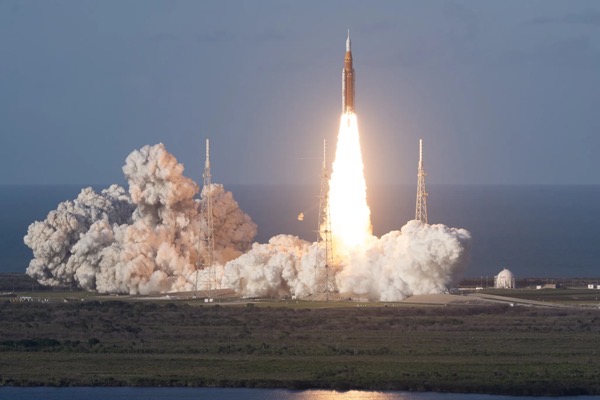
At 6:36 p.m. local U.S. time on April 1, NASA’s “Artemis II” mission launched to great anticipation aboard the “Space Launch System” rocket. This marks not only the first crewed launch of the “Space Launch System” and the spacecraft “Orion”, but also humanity’s first crewed lunar flyby in 53 years since the end of the “Apollo” program in the 1970s.
The historic 10-day mission is led by Commander Reid Wiseman. The crew includes Christina Koch, the first woman to participate in a lunar mission; Victor Glover, the first Black astronaut to orbit the Moon; and Canadian astronaut Jeremy Hansen. This diverse and highly skilled team symbolizes how space exploration has moved beyond past gender and racial barriers into a new era of international collaboration.
During the “Artemis II” mission, “Orion” will first orbit Earth for system checks after launch, then head toward the Moon. On the sixth day, it is expected to fly past the far side of the Moon, during which communication with Earth will be temporarily lost. The spacecraft will reach a distance of approximately 406,000 kilometers from Earth, setting a new record and surpassing the farthest distance achieved by “Apollo 13”. It will then use the Moon’s gravity to return, re-enter Earth’s atmosphere at extremely high speed, posing significant risks, and is expected to splash down in the Pacific Ocean.
Although this mission will not land on the Moon, the data collected will help determine future landing sites. NASA plans to conduct docking practice in 2027 and aims to return humans to the lunar surface in 2028. Over the next seven years, NASA plans to invest 20 billion dollars to build a lunar base and exploration infrastructure, signaling the beginning of humanity’s long-term presence in deep space.
- 145 reads
Human Rights

Fostering a More Humane World: The 28th Eurasian Economic Summi

Conscience, Hope, and Action: Keys to Global Peace and Sustainability


Puppet Show I International Friendship Day 2020