Elon Musk Launches “Terafab” Super Chip Plant, Targeting a New Era of AI Computing Power and Space Expansion
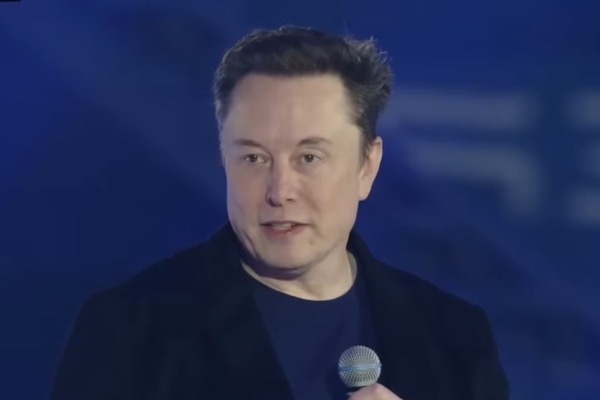
American entrepreneur Elon Musk has announced the launch of a large-scale semiconductor initiative called “Terafab.” The project is expected to build an advanced chip manufacturing facility near Austin, Texas, focusing on high-performance chips for artificial intelligence, robotics, and space computing. Its scale is described as potentially reshaping the existing industry landscape. According to the plan, the facility will be jointly driven by Tesla and SpaceX, with a target of delivering around 1 terawatt (TW) of computing capacity annually. Musk noted that the computing demand across his businesses is rising rapidly and has already far outpaced the expansion speed of current supply chains, prompting the decision to invest in chip production independently.
Musk pointed out that existing partners such as TSMC, Samsung, and Micron possess strong manufacturing capabilities, but their capacity expansion still struggles to keep up with demand growth. “Terafab” aims to integrate design, production, and testing processes into a single site, emphasizing a high degree of vertical integration. Industry estimates suggest that the initial investment for the project could reach between $20 billion and $25 billion. If successfully realized, its production scale would far exceed the current total supply of AI chips and has been described by some tech media as “unprecedented.”
On the technical front, market rumors indicate that “Terafab” may target advanced process nodes while incorporating packaging and system integration. However, industry experts also point out that wafer fabrication involves complex processes and yield management, requiring long-term experience accumulation. Even with sufficient capital, it would be difficult to catch up with existing leading manufacturers in the short term. Beyond ground-based applications, Musk has also outlined a more ambitious long-term vision. He stated that part of the computing capacity may eventually be deployed in space to reduce energy and infrastructure constraints, support larger-scale AI operations, and even serve as a foundation for humanity’s expansion into space resources.
Analysts believe that “Terafab” is not only intended to address supply bottlenecks but also represents a key step in Musk’s integration of electric vehicles, aerospace, and artificial intelligence. If the project progresses smoothly, it could have a profound impact on the global semiconductor supply chain, though its technical and execution challenges remain to be proven over time.
- 135 reads
Human Rights
Fostering a More Humane World: The 28th Eurasian Economic Summi

Conscience, Hope, and Action: Keys to Global Peace and Sustainability

Ringing FOWPAL’s Peace Bell for the World:Nobel Peace Prize Laureates’ Visions and Actions

Protecting the World’s Cultural Diversity for a Sustainable Future

Puppet Show I International Friendship Day 2020