Nissan Teams Up with Uber and Wayve to Launch Autonomous Ride-Hailing in Tokyo
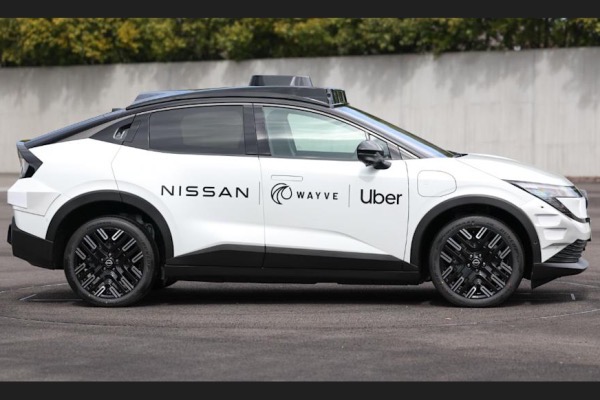
Japanese automaker Nissan has announced that it will collaborate with ride-hailing platform Uber and the UK autonomous driving technology company Wayve to launch a pilot program for robotaxi services in Tokyo. The goal is to begin testing the service in Japan’s capital by the end of 2026, exploring new forms of future urban mobility.
According to the plan, the pilot fleet will be based on Nissan’s electric vehicle, the Nissan Leaf, equipped with Wayve’s AI-powered autonomous driving system, and the service will be offered through Uber’s ride-hailing platform. During the initial phase of operations, trained safety drivers will remain inside the vehicles to ensure the testing process meets safety and regulatory requirements.
Nissan President Ivan Espinosa stated at a briefing in Tokyo that the company hopes to gradually integrate smart mobility services into everyday life. Uber also emphasized that passenger safety will remain the top priority as it gradually advances the deployment of autonomous ride-hailing services.
In terms of responsibilities, Wayve will provide its end-to-end AI autonomous driving technology, Nissan will integrate the vehicle platform and hardware systems, and Uber will provide the passenger-facing ride-hailing platform and operational network. A key feature of Wayve’s technology is that it does not rely entirely on high-definition maps, but instead continuously learns from road data and adapts to different urban traffic environments.
Tokyo is regarded as a crucial testing ground for autonomous driving technology. Due to its complex road design, heavy traffic, and strict safety standards, many companies believe that successfully operating in Tokyo would help replicate the service model in other cities in the future.
This initiative is also seen as part of Nissan’s strategy to create new growth opportunities. In recent years, competition in the global robotaxi market has intensified, with companies such as Alphabet’s Waymo, Tesla, and China’s Apollo Go actively expanding their presence. By partnering with technology companies and platform operators, Nissan hopes to regain a competitive edge in autonomous driving and next-generation mobility services.
In addition, Nissan and Wayve plan to introduce related autonomous driving technologies into mass-production vehicles. Starting from the fiscal year 2027, some new vehicle models are expected to adopt the jointly developed autonomous driving system. Industry analysts believe that if the Tokyo pilot project proves successful, the tripartite cooperation model could expand to other cities and countries, becoming an important case in the global development of autonomous ride-hailing services.
- 240 reads
Human Rights

Fostering a More Humane World: The 28th Eurasian Economic Summi

Conscience, Hope, and Action: Keys to Global Peace and Sustainability


Puppet Show I International Friendship Day 2020