2025: The Year of Explosive Growth in AI Software Applications
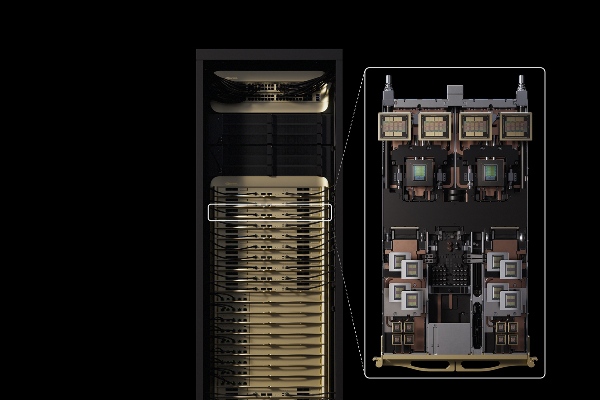
This year (2025) is widely regarded as a breakthrough year for artificial intelligence (AI) software applications. AI has moved beyond the stage of technological exploration and into large-scale industrialization and real-world implementation. It has become truly ubiquitous, generating significant breakthroughs that affect both industries and individuals. As the year comes to a close, our news production team has specially selected ten AI-related news stories to share with readers, bearing witness to the innovations and achievements of artificial intelligence, while also looking forward to the convenience and possibilities AI may bring to humanity in the future.
Scientists Predict: Artificial Intelligence (AI) Will Extend Human Lifespan
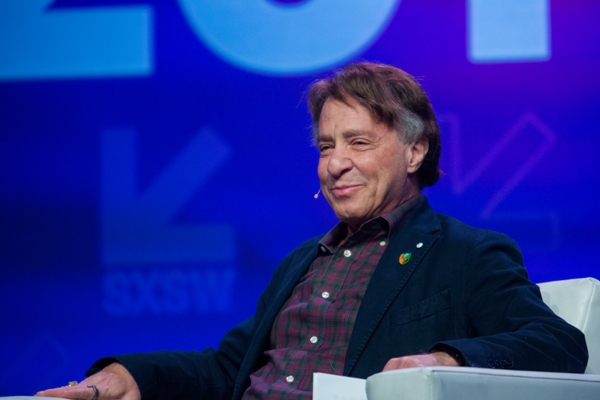
Scientist Ray Kurzweil predicts that future advances in artificial intelligence (AI) will surpass current scientific limits and may enable humans to stop aging and live up to 500 years. He emphasizes that AI’s impact will be most profound in the medical field. At present, AI is already capable of analyzing protein structures, driving progress in drug development and disease diagnosis. Kurzweil optimistically forecasts that AI will help cure most human diseases in the future and may even make it possible to halt aging. In other words, as medical technology advances, for every year a person ages, their life expectancy could increase by one year—a concept known as “longevity escape velocity.” Kurzweil further predicts that after 2032, scientific and technological advances may allow humans to achieve physiological “rejuvenation.” In short, even as chronological age increases, technology could potentially reverse the aging process and enable extended longevity.
NVIDIA Achieves New AI Breakthrough as Robot Accurately Recreates Kobe Bryant’s Fadeaway Jumper
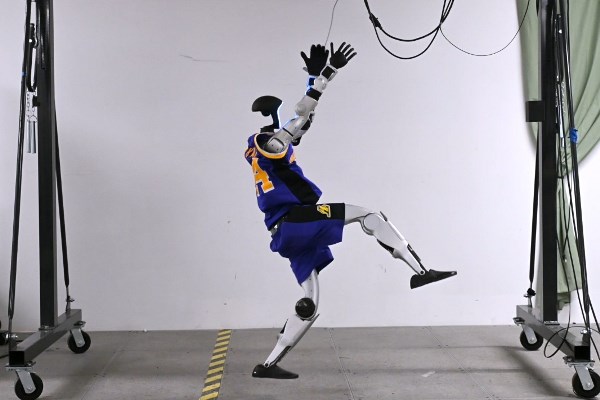
A groundbreaking artificial intelligence (AI) learning technology jointly developed by chip giant NVIDIA and Carnegie Mellon University (CMU) has stunned observers by successfully replicating NBA superstar Kobe Bryant’s signature fadeaway jump shot. Through a two-stage training process that integrates simulated environments with real-world physical differences, the technology significantly narrows the gap between humanoid robot movements and actual human motion. With this new approach, motion errors can be reduced by approximately 53%, enabling robots to perform more complex full-body actions. Although limitations in hardware and joint numbers mean the robot may still appear somewhat stiff, its agility has improved dramatically compared with previous generations of humanoid robots.
The Smartest AI on Earth”: Musk Unveils Grok 3—So Intelligent It’s Scary
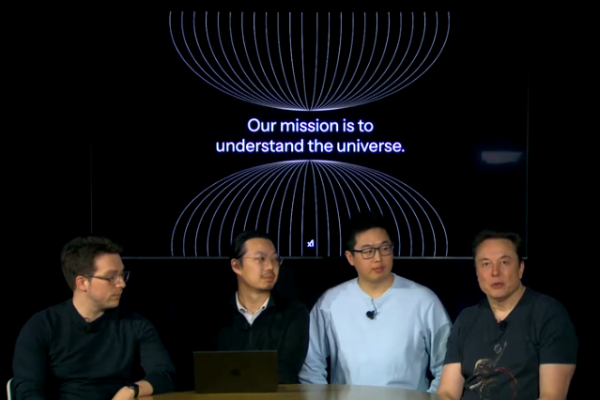
Elon Musk’s startup xAI has released the latest version of its artificial intelligence (AI) chatbot, Grok 3. Musk stated that Grok 3 has ten times the computing power of its previous generation and described it as “so intelligent it’s scary.” Grok 3 is built on a much larger dataset and more advanced algorithms, and features a Deep Search capability that repeatedly reviews data to identify and correct its own mistakes, significantly improving the coherence and accuracy of its responses. Musk emphasized that Grok 3’s performance already surpasses that of existing chatbots currently on the market. He also noted that the most important mission of xAI and Grok is to “understand the true nature of the universe.
Apple Develops AI Health Assistant Integrating Data to Provide Medical Guidance
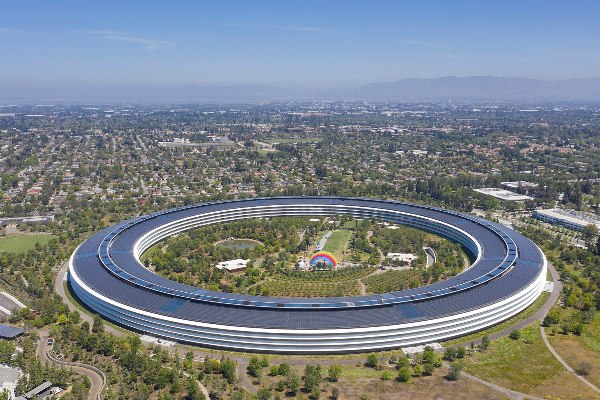
Apple is actively developing an artificial intelligence (AI)–based health management feature aimed at offering users more personalized medical guidance. This technology will deeply integrate physiological data collected by the Apple Watch and combine it with professional medical advice and lifestyle management recommendations. It is expected to launch as early as spring next year (2026).
The AI assistant’s core functions will include real-time health recommendations as well as dietary and exercise planning. Apple plans to have the AI analyze data gathered by the watch, and when abnormalities such as irregular heart rates or other changes in physical indicators are detected, the system will recommend relevant medical expert videos to help users understand potential health risks and learn appropriate response strategies.
AI Super Bowl: Jensen Huang Unveils the Next-Generation Blackwell
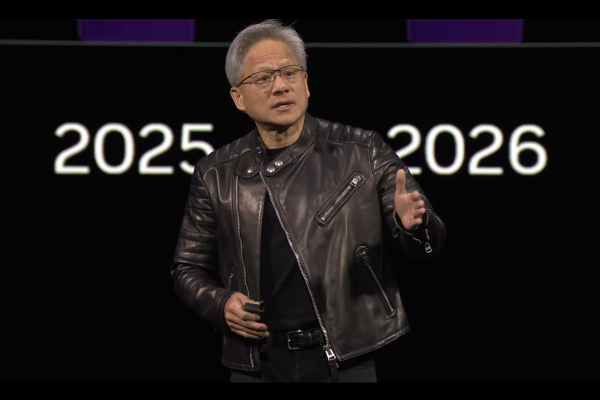
NVIDIA CEO Jensen Huang spoke about the development trajectory of artificial intelligence (AI) at the GTC technology conference, where he also unveiled a new lineup of chips. He described this year’s GTC as the “AI Super Bowl,” saying that in this astonishing AI competition, everyone is a winner.
Huang noted that AI has made remarkable progress in just a decade. Over the past five years, the industry has focused on generative AI, enabling the transformation of text into images, videos, and other content. The latest advancement, agentic AI, not only understands problems and performs reasoning, but can also take action.
At the GTC conference, Huang introduced NVIDIA’s next-generation Blackwell Ultra GPU, which enhances inference scalability during both the training and testing stages. By allocating greater computing resources during the inference process, the chip improves accuracy. This technology is expected to help industries around the world accelerate the adoption of AI-driven reasoning.
AI-Generated Ghibli-Style Images Draw Widespread Attention
OpenAI’s image generation model has successfully created artworks resembling the animation style of Studio Ghibli. These images, rich in detail and imbued with a fairy-tale atmosphere, have impressed many animation enthusiasts and highlighted the rapid progress and creative potential of artificial intelligence. Some users have even experimented with different keywords to explore AI’s creative capabilities across various scenarios, discovering that AI can flexibly reproduce a wide range of artistic styles.
However, some professional artists have expressed concerns that AI-generated images may affect creators’ livelihoods and raise issues related to copyright and ethics. Looking ahead, the application of artificial intelligence in the arts will continue to evolve, and how to strike a balance between innovation and tradition will remain a key focus for the industry.

AI Disrupts Traditional Art Restoration, Rapidly Reviving a 15th-Century Oil Painting
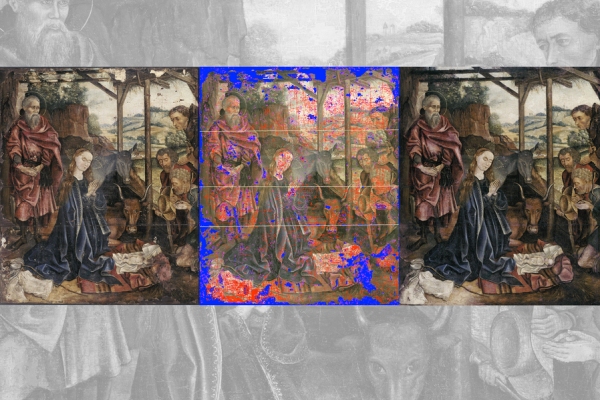
A groundbreaking art restoration method developed by an MIT graduate student has stunned both the art and scientific communities. By combining artificial intelligence with precision printing technology, the technique successfully restored a damaged 15th-century oil painting in just 3.5 hours. Researcher Alex Kachkine integrated image recognition, algorithmic reconstruction, and the printing of a dual-layer transparent film to propose a “non-invasive mask reconstruction technique,” enabling detailed restoration without directly touching the canvas.
The restoration process is fully reversible: the film can be removed at any time without leaving residue, thereby preserving the original materials. Each restoration is also comprehensively documented in digital form, allowing for future comparison and re-restoration if needed. This model of “reversible restoration” has received academic recognition and is considered a promising new pathway for the preservation of cultural heritage.
Beyond its technical achievement, the research highlights the potential of interdisciplinary collaboration and invites a rethinking of the meaning and boundaries of restoration work. From traditional techniques to digital innovation, artificial intelligence is breathing new life into historical art in unprecedented ways.
AI Wins Gold at the Math Olympiad for the First Time
The 66th International Mathematical Olympiad (IMO) was held in mid-July 2025 on the Sunshine Coast, Queensland, Australia. Among the gold medals awarded, one was won by “Gemini,” an artificial intelligence (AI) developed by Google DeepMind—marking the first time an AI system has reached gold-level performance at the IMO.
DeepMind’s model solved mathematical problems using a natural language-based general reasoning model that interprets mathematical concepts. It participated under the same rules as human contestants, completing six problems in algebra, geometry, and combinatorics over two 4.5-hour exam sessions.
Olympiad chair Gregor Dolinar noted that the AI’s problem-solving performance was impressive in many aspects. Judges described Gemini’s solutions as clear, precise, and easy to understand, demonstrating a significant breakthrough in AI’s mathematical reasoning capabilities.
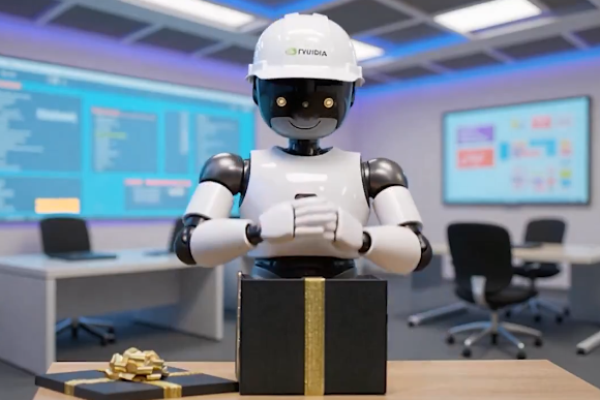
NVIDIA Launches Next-Generation AI Module to Lead the Era of General-Purpose Robots
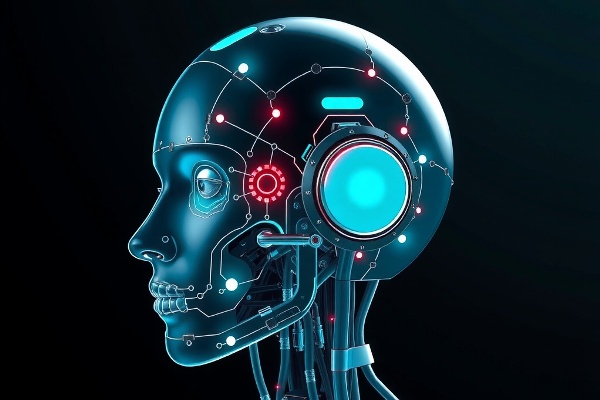
NVIDIA has unveiled its next-generation edge computing platform, Jetson AGX Thor, hailed as the “new brain for robots.” The system’s GPU features the all-new Blackwell architecture, delivering over seven times the computing performance of the previous-generation Orin, along with significantly improved energy efficiency.
CEO Jensen Huang stated that Jetson Thor is designed for developers, capable of simultaneously running multiple generative AI models and interacting with the real world. He described the system as a major milestone for advancing “physical AI,” enabling humanoid robots, medical assistance machines, and automation systems to achieve smarter and more real-time responses.
Google Upgrades Gemini: Preserves Facial Details in Image Edits
Google has released the latest generation of Gemini image editing technology, designed to accurately retain the essence of people and pets even when changing hairstyles, outfits, or scenes. This addresses a common issue in AI-generated images, where subjects often appear “similar but distorted.”
Developed by the DeepMind team, the model is now available in the Gemini app, allowing users to iteratively refine images through conversation and even merge multiple photos into new compositions for more natural results. The standout feature of this upgrade is consistent character appearance: even after multiple rounds of edits, facial features, proportions, and clothing details remain intact, avoiding the problem of “face-swapping” or distortion.
In addition to image enhancements, Google has also upgraded the NotebookLM note-taking assistant. Its voice summaries have evolved from brief highlights into deeper, more comprehensive analyses, helping users better understand content in full detail.

- 313 reads
Human Rights

Fostering a More Humane World: The 28th Eurasian Economic Summi

Conscience, Hope, and Action: Keys to Global Peace and Sustainability


Puppet Show I International Friendship Day 2020