World
Tensions Escalate Between India and Pakistan Following Terror Attack; Borders Sealed
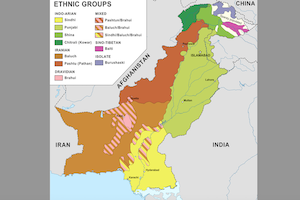
On the 24th, Pakistan announced the closure of its border with India, the shutdown of its airspace to Indian aircraft, and the suspension of its water-sharing treaty with India in retaliation for a recent armed attack in Kashmir. In response, India's Ministry of External Affairs declared the closure of the main border checkpoint between the two nations, the expulsion of Pakistani diplomats, the suspension of visa services, and the revocation of all visas previously issued to Pakistani citizens. India also immediately suspended the bilateral water-sharing agreement.
Regarding the Kashmir attack, India claimed Pakistan was involved, while Pakistan denied any connection and accused India of failing to provide evidence. On the evening of the 24th, gunfire was exchanged between Indian and Pakistani military forces near the Line of Control in Kashmir. The situation escalated rapidly, with Pakistan using light weapons and India retaliating. However, no civilian areas were targeted, and no casualties were reported.
Pakistan issued a stern warning, stating that any attempt to divert water resources would be considered an act of war. Defense Minister Khawaja Asif declared that Pakistan would respond equally to any Indian aggression and warned that the Kashmir attack could potentially lead to war between the two countries. He expressed hope for a peaceful resolution through dialogue. Meanwhile, the United Nations urged both India and Pakistan to exercise maximum restraint to prevent further deterioration of the situation.
- Read more
- 228 reads
Following California's Accusation of Trump’s Tariff Policy Abuse, 12 U.S. States Join in Lawsuit Against Trump
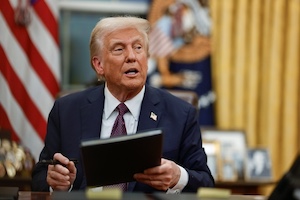
U.S. President Donald Trump’s aggressive and haphazard tariff policies have caused turbulence in the global economy. Now, attorneys general from 12 U.S. states have jointly filed a lawsuit against him, accusing Trump of abusing the *International Emergency Economic Powers Act* (IEEPA). They argue that his unilateral imposition of tariffs is unlawful and are asking the court to block federal agencies from enforcing the tariff policy. According to the U.S. Constitution, only Congress has the authority to set tariff policies.
The lawsuit is being led by the state of Oregon, whose international trade and sportswear industries have been significantly impacted by the tariffs. Other participating states include Arizona, Colorado, Connecticut, Delaware, Illinois, Maine, Minnesota, Nevada, New Mexico, New York, and Vermont.
Oregon Attorney General Dan Rayfield stated, “When a president pushes illegal policies that drive up the cost of living — including utilities and groceries — we cannot stand by. These tariffs affect our daily lives, from the grocery store to the hospital. We must fight back.”
New York Attorney General Letitia James said Trump had promised to lower prices and reduce the cost of living, but these unlawful tariffs would instead lead to more inflation, job losses, and economic damage.
White House spokesperson Kush Desai dismissed the lawsuit as a "political witch hunt," asserting that the administration would continue using its legal powers to address national emergencies such as illegal immigration, fentanyl trafficking, and the trade deficit.
California had already filed a similar lawsuit last week, claiming that Trump’s tariff policies and trade war have harmed the state’s economy. Advocacy groups such as the Center for Free Justice and the New Civil Liberties Alliance have also joined the legal action.
- Read more
- 304 reads
Terrorist Attack in Kashmir, India – Over 26 Tourists Killed
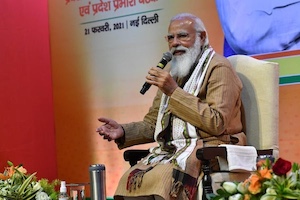
A terrorist attack recently occurred in Pahalgam, a popular tourist destination in Indian-administered Kashmir, resulting in at least 26 deaths and dozens of injuries. An armed group has claimed responsibility, and Indian Prime Minister Narendra Modi has issued a statement condemning the attack.
At 3 p.m. on the 22nd, gunmen launched a terrorist attack in the scenic resort town of Pahalgam, a well-known summer retreat in India. The attackers reportedly used nearby forest cover to infiltrate from the surrounding mountains before opening fire on tourists. At least 26 people were killed, most of whom were Indian tourists. Due to the area's limited accessibility—only reachable on foot or horseback—the Indian government deployed helicopters to evacuate the injured. Local police have sealed off the area and launched a full-scale manhunt.
Preliminary investigations suggest that around five to seven suspects were involved. On the 23rd, Indian security forces released photos and sketches of three male suspects, stating that they are Pakistani nationals. The Resistance Front, a faction under Lashkar-e-Taiba (LeT)—one of South Asia’s largest and most active Islamist terrorist organizations—has claimed responsibility for the attack.
Prime Minister Narendra Modi, who was on a state visit to Saudi Arabia at the time, returned to India urgently. He strongly condemned the attack as a heinous act and reaffirmed India’s strengthened resolve to combat terrorism. He convened the Cabinet Committee on Security to discuss countermeasures. Following the meeting, Deputy Foreign Minister Vikram Misri announced several responses: in addition to heightened domestic security measures, the Attari Integrated Check Post at the border has been temporarily closed. Pakistani nationals currently in India on SVES visas must leave within 48 hours, and further entry is now banned. Additionally, the *Indus Waters Treaty*, which governs shared water resources between India and Pakistan, has been suspended with immediate effect.
Although armed conflicts have been frequent in the Kashmir region, they had been on the decline in recent years. However, the scale of this civilian-targeted attack marks a significant and troubling escalation.
- 166 reads
Honoring Pope Francis: A Conscience-Driven Leader of Evangelization
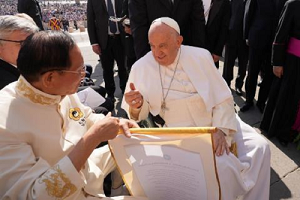
Pope Francis gives a thumbs up after receiving the scroll of “Love of the World, A Declaration of Peace” from Dr. Hong, Tao-Tze, president of FOWPAL.
- Read more
- 353 reads
Putin Expresses Willingness for Peace Talks with Ukraine for the First Time

Russian President Vladimir Putin has, for the first time, publicly expressed Russia’s willingness to engage in peace talks regarding the war in Ukraine, potentially opening a path to resolve the conflict that has lasted for over three years. This statement is seen by many as a shift in Russia’s stance and has drawn significant international attention.
Following the failure of a 30-hour "test of loyalty" ceasefire between Russia and Ukraine during Easter, with both sides accusing each other of violating the agreement, the United States has grown increasingly impatient with mediating the conflict. U.S. officials have warned that unless progress is made, they may disengage from further involvement.
Against this backdrop, on April 21, Putin proposed the first bilateral talks with Ukraine in years. It’s important to note that since the war broke out in February 2022, there have been no direct negotiations between the two sides.
According to reports, Putin’s proposal includes freezing the current frontlines and dropping claims to control parts of Donetsk, Luhansk, Kherson, and Zaporizhzhia, on the condition that the U.S. recognizes Crimea as Russian territory and guarantees that Ukraine will not join NATO. This proposal is believed to have been floated during a meeting between Putin and Donald Trump’s envoy, Vitkov, in early April. Many observers interpret this as a deliberate “controlled leak” to pave the way for future peace negotiations.
However, Ukraine remains firm in its position. President Volodymyr Zelenskyy, in a recent press conference, strongly rejected any possibility of ceding territory, stating, “There is nothing to negotiate. This is beyond our constitution. This is our land, the land of the Ukrainian people. It’s not going to happen.” He emphasized that Ukraine has not received any formal proposal and will not recognize Russia’s annexation of Crimea.
Speaking at a press conference in Moscow, Putin stated: “Russia has never closed the door to negotiations. We are willing to engage in substantive dialogue with Ukraine and other relevant parties, based on mutual respect for each other's interests and security.” He stressed that the precondition for negotiations is that Western countries must stop providing military aid and acknowledge Russia’s legitimate security concerns.
Ukraine has yet to issue a public response. However, President Zelenskyy has repeatedly stated that the basis for any talks must include the full withdrawal of Russian troops from occupied territories and the restoration of Ukraine’s sovereignty and territorial integrity.
International reactions to Putin’s remarks have been mixed. The U.S. State Department said it would continue to observe whether Russia takes any concrete actions to support this statement. EU diplomats commented that the possibility of peace talks is worth exploring but must be grounded in international law and respect Ukraine’s sovereignty.
Since Russia’s full-scale invasion of Ukraine in February 2022, the two sides have held multiple rounds of contact without reaching any substantial agreement. Putin’s latest comments are seen as a signal that Russia, under growing domestic and international pressure, is seeking a way out of the war.
Although fighting continues, whether this statement could become a breakthrough remains to be seen.
- Read more
- 263 reads
U.S. Secretary of State: No Hope for Russia-Ukraine Ceasefire; U.S. May Be Ready to Abandon Mediation
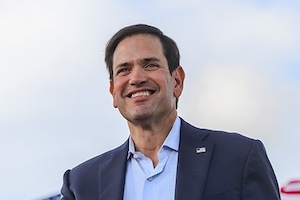
The Russia-Ukraine war has lasted for over three years. On the 17th, Ukraine announced the signing of a memorandum of understanding on mineral cooperation with the United States. However, on the 18th, U.S. Secretary of State Marco Rubio dropped a bombshell, stating that if a ceasefire cannot be achieved within the next few days—indicating that the positions of both sides remain irreconcilable—the United States will prepare to abandon its efforts to mediate a ceasefire.
On the 17th, Rubio, along with U.S. Special Envoy Steve Witkoff, held talks in Paris with several European officials regarding a ceasefire and peace plan for the Russia-Ukraine conflict. Rubio said that a framework for peace talks had already been provided to both countries for consideration. He urged Russia and Ukraine to clarify as soon as possible whether a ceasefire is feasible. If there is a possibility of ending the war, the United States will do its utmost to assist. However, if the positions of both sides are too divergent to achieve a ceasefire, U.S. assistance cannot continue indefinitely without progress or deadlines.
Several European diplomats noted that Ukraine has already agreed to the U.S.-proposed 30-day ceasefire plan, but Russia has responded with indifference, claiming it holds the upper hand on the battlefield and has therefore made numerous demands. If the U.S. does withdraw from mediation, it would be seen as a major victory for Russia. Rubio’s latest statement appears to be a form of pressure on both parties, aimed at compelling Ukraine and Russia to make concrete commitments and decisions promptly.
- 424 reads
Aging Power Grid Infrastructure Causes Island-Wide Blackout in Puerto Rico
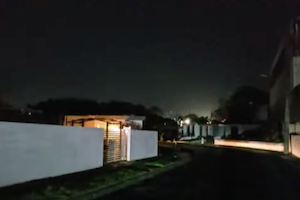 large-scale power outage occurred in Puerto Rico on April 16 (local time), with all power plants shutting down at one point, plunging the entire island into darkness and leaving 1.4 million customers without electricity. Reports indicate that power restoration may take up to 72 hours, highlighting the aging state of the island’s power grid infrastructure.
The blackout began shortly after 12:00 p.m. on April 16. Genera, the power generation company, stated that the complete halt of all power plants led to the widespread outage. LUMA Energy, the power transmission and distribution operator, said full restoration could take as long as 72 hours. The sudden, island-wide blackout caused major disruptions, including traffic chaos, the shutdown of the urban train system, severe congestion in city streets, and the forced closure of shopping centers and malls. Around 1.4 million households across the island were left without power, triggering widespread public frustration.
Puerto Rico, home to approximately 3.2 million people, has a poverty rate as high as 40%. Since Hurricane Maria devastated the island in 2017, Puerto Rico has faced persistent problems with its electrical grid. Major blackouts have become increasingly common in recent years, with the most recent one occurring on New Year’s Eve, December 31. The recurrence of such outages—as seen again on April 16—underscores the urgent need to address the island’s deteriorating power infrastructure.
- Read more
- 570 reads
Japan and the U.S. Begin Tariff Negotiations; Trump Hopes for Swift Agreement
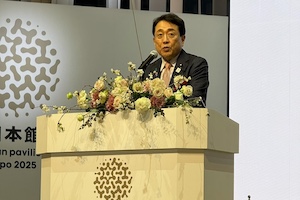
Japan and the United States began bilateral tariff negotiations on the 16th, led by Japan’s Minister for Economic Revitalization, Ryomasa Akazawa. U.S. President Donald Trump personally met with Akazawa for approximately 50 minutes. Following the meeting, a 75-minute discussion was held with key U.S. cabinet members including Treasury Secretary Scott Besant, Commerce Secretary Robert Lutnick, and U.S. Trade Representative Jamieson Lee Greer. Before departing from Tokyo, Akazawa stated that he would prioritize Japan’s national interests. Trump expressed his desire to reach an agreement with Japan as soon as possible and later posted that the talks had made “significant progress.”
On the 14th, Japanese Prime Minister Shigeru Ishiba publicly stated in the National Diet that Japan is not prepared to make major concessions in the negotiations and is in no rush to reach an agreement. He also ruled out the possibility of imposing retaliatory tariffs on the U.S.—his strongest warning to Washington thus far. Ishiba stressed that the negotiations should not be rushed, warning that "constant compromise" and "hasty settlements" may ultimately lead to failure.
On the afternoon of the 16th (Washington time), Akazawa first met with around 10 representatives from Japanese business circles in the U.S. to exchange views on tariff-related issues and to better understand the challenges faced by Japanese companies operating locally.
On the morning of the 17th, Ishiba stated at the Prime Minister’s Office that both sides had engaged in lengthy, honest, and constructive discussions and would proceed to the next phase. He added that he himself plans to visit the U.S. at "the most appropriate time" to negotiate directly with President Trump. At a press conference following the talks, Akazawa announced that the two sides had reached three points of consensus:
1. Both parties will engage in constructive discussions with the goal of reaching an agreement as soon as possible, to be jointly announced by the two leaders;
2. A schedule adjustment will be made to hold the next round of talks within the month;
3. In addition to ministerial-level discussions, working-level talks will continue as well.
Japan has requested the removal of certain tariff measures, but has not disclosed specific U.S. demands in areas such as automobiles and agriculture, stating only that negotiations are "ongoing." The issue of U.S. military forces stationed in Japan was also on the agenda. While the Trump administration had previously raised concerns over the yen’s exchange rate, this issue was not included in the discussions.
- Read more
- 456 reads
U.S. Announces National Security Investigation into Imported Semiconductors

The *Federal Register* on April 14 reported that the U.S. Department of Commerce has announced a national security investigation into imported semiconductors. The scope of the investigation includes silicon wafers, semiconductor components, chip manufacturing equipment, and downstream products containing semiconductors.
According to foreign media reports, the purpose of the investigation is to assess the feasibility of boosting domestic semiconductor production, reduce reliance on imports, and explore whether additional tariffs or other trade measures are needed to safeguard national security.
Although U.S. President Donald Trump stated on April 11 that certain electronic products such as smartphones, computers, and semiconductors could be exempt from reciprocal tariffs, chips and the broader electronics supply chain were not excluded. The Trump administration is planning to impose new tariffs on imported semiconductor products. Commerce Secretary Howard Lutnick stated on the political talk show *This Week* on April 13 that these measures could be officially implemented within the next one to two months. The measures are based on Section 232 of the 1962 *Trade Expansion Act*, which allows the President to impose tariffs on the grounds of national security.
In addition, the Trump administration has launched a similar national security investigation into pharmaceuticals and drug ingredients, underscoring its strong emphasis on supply chain security.
- 201 reads
Airstrike Kills 34 in Sumy, Ukraine; Czech Republic Condemns Russia's Lack of Peace Effort
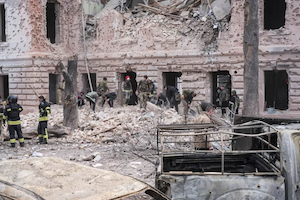
On April 13, Russia launched a deadly missile strike on the Ukrainian city of Sumy, killing at least 34 civilians and injuring around 100 others, including several children. This marks one of the deadliest Russian attacks on Ukraine this year. Czech officials strongly condemned the assault, urging the international community to take tougher action against Moscow.
Czech President Petr Pavel stated that the attack shows Russia has no intention of seeking peace and emphasized that without increased pressure on Russia, the situation will not change. Prime Minister Petr Fiala said Russia’s actions threaten the security of all Europe and revealed that the Czech Republic is cooperating with the UK- and France-led “coalition of volunteers” to enhance support for Ukraine.
Other high-ranking Czech officials also condemned Russia’s actions, labeling them as “war crimes” and “atrocities.” Foreign Minister Jan Lipavský reaffirmed strong support for Ukraine and criticized the Russian regime as “led by murderers.” Speaker of the Chamber of Deputies Markéta Pekarová Adamová warned against naively believing that Putin seeks peace. Agriculture Minister Marek Výborný called on former U.S. President Donald Trump to hold Russia accountable and push for a ceasefire.
Sumy, located just tens of kilometers from the Russian border, has suffered repeated airstrikes since the Russia-Ukraine war began three years ago. Although the Trump administration has attempted to broker a limited ceasefire agreement, it has yet to yield concrete results.
- 198 reads
Human Rights

Fostering a More Humane World: The 28th Eurasian Economic Summi

Conscience, Hope, and Action: Keys to Global Peace and Sustainability
Puppet Show I International Friendship Day 2020