Science
Going swimmingly: Biotemplates breakthrough paves way for cheaper nanobots: By using bacterial flagella as a template for silica, researchers have demonstrated an easier way to make propulsion systems for nanoscale swimming robots

Trajectory of a templated helical silica nanoswimmer manually controlled to move in an approximate figure-eight pattern; scale bar is 5 μm.
- Read more
- 504 reads
MUSE Probes Uncharted Depths of Hubble Ultra Deep Field

Astronomers using the MUSE instrument on ESO’s Very Large Telescope in Chile have conducted the deepest spectroscopic survey ever. They focused on the Hubble Ultra Deep Field, measuring distances and properties of 1600 very faint galaxies including 72 galaxies that have never been detected before, even by Hubble itself. This wealth of new information is giving astronomers insight into star formation in the early Universe, and allows them to study the motions and other properties of early galaxies — made possible by MUSE’s unique spectroscopic capabilities.
- Read more
- 516 reads
A transistor of graphene nanoribbons: Breakthrough in Nanoelectronics
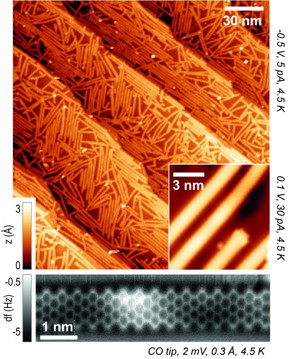
The microscopic ribbons lie criss-crossed on the gold substrate.
- Read more
- 526 reads
Drug-delivering nanoparticles seek and destroy elusive cancer stem cells

Illinois researchers developed nanoparticles that can target cancer stem cells (yellow), the rare cells within a tumor (blue) that can cause cancer to recur or spread.
- Read more
- 528 reads
NASA Builds its Next Mars Rover Mission

his artist's rendition depicts NASA's Mars 2020 rover studying a Mars rock outrcrop. The mission will not only seek out and study an area likely to have been habitable in the distant past, but it will take the next, bold step in robotic exploration of the Red Planet by seeking signs of past microbial life itself.
https://www.jpl.nasa.gov/news/news.php?release=2017-305&rn=news.xml&rst=...
- Read more
- 493 reads
Newly Discovered Twin Planets Could Solve Puffy Planet Mystery

Upper left: Schematic of the K2-132 system on the main sequence. Lower left: Schematic of the K2-132 system now. The host star has become redder and larger, irradiating the planet more and thus causing it to expand. Sizes not to scale. Main panel: Gas giant planet K2-132b expands as its host star evolves into a red giant. The energy from the host star is transferred from the planet's surface to its deep interior, causing turbulence and deep mixing in the planetary atmosphere. The planet orbits its star every nine days and is located about 2000 light years away from us in the constellation Virgo.
- Read more
- 500 reads
Graphene oxide making any material suitable to create biosensors: Scientists from Tomsk Polytechnic University have developed a new tool for biomedical research focused on single-cell investigation

Single cell immobilization on GO modified substrates.
- Read more
- 487 reads
A material with promising properties: Konstanz scientist synthesizes an important ferromagnetic semiconductor

icture of a hybrid particle taken by a transmission electron microscope. Pictured are the inorganic (dark) and organic (light) lamellas that the particle is made of, as well as the tubular shapes (the low-contrast area in the middle). Through vaporisation with Europium, the hybrid stage can be transformed into pure EuO.
- Read more
- 496 reads
Tiny robots step closer to treating hard-to-reach parts of the body

Spirulina algae coated with magnetic particles to form a microrobot. Devices such as these could be developed to diagnose and treat illness in hard-to-reach parts of the body.
- Read more
- 487 reads
Cassini Image Mosaic: A Farewell to Saturn

After more than 13 years at Saturn, and with its fate sealed, NASA's Cassini spacecraft bid farewell to the Saturnian system by firing the shutters of its wide-angle camera and capturing this last, full mosaic of Saturn and its rings two days before the spacecraft's dramatic plunge into the planet's atmosphere.
- Read more
- 568 reads
Human Rights
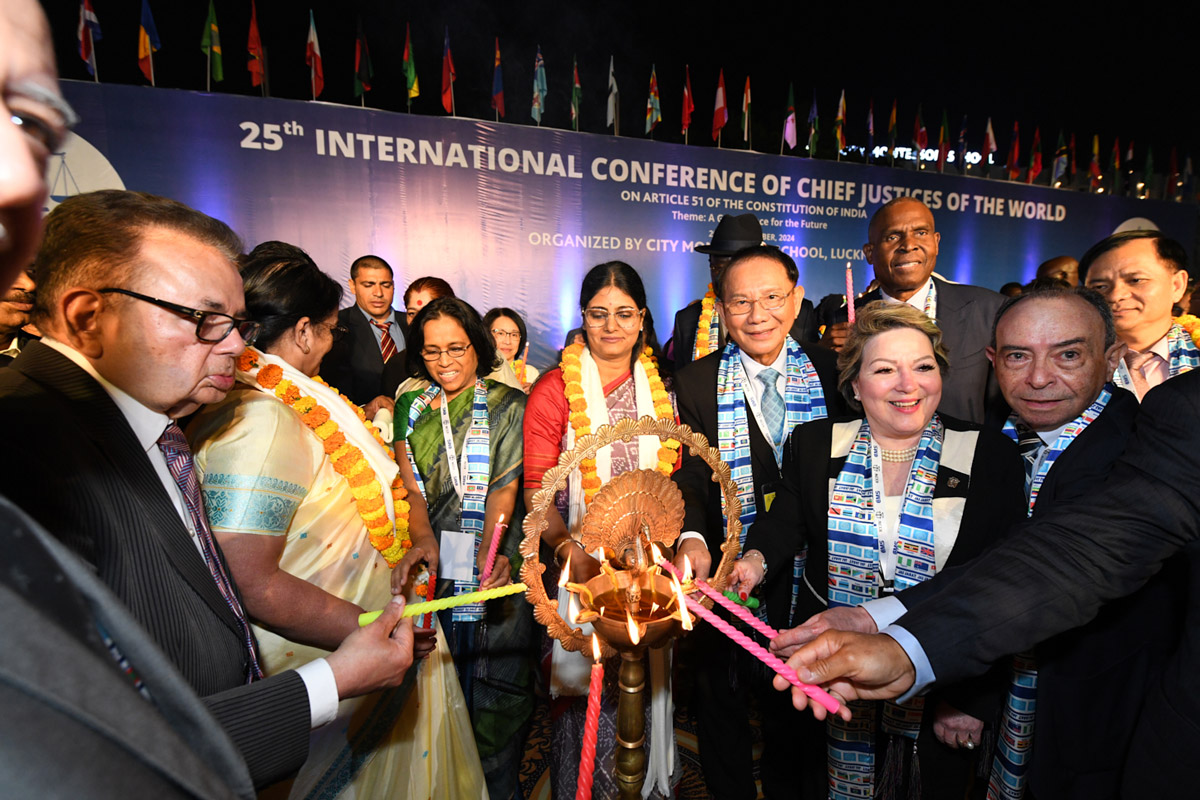
Fostering a More Humane World: The 28th Eurasian Economic Summi

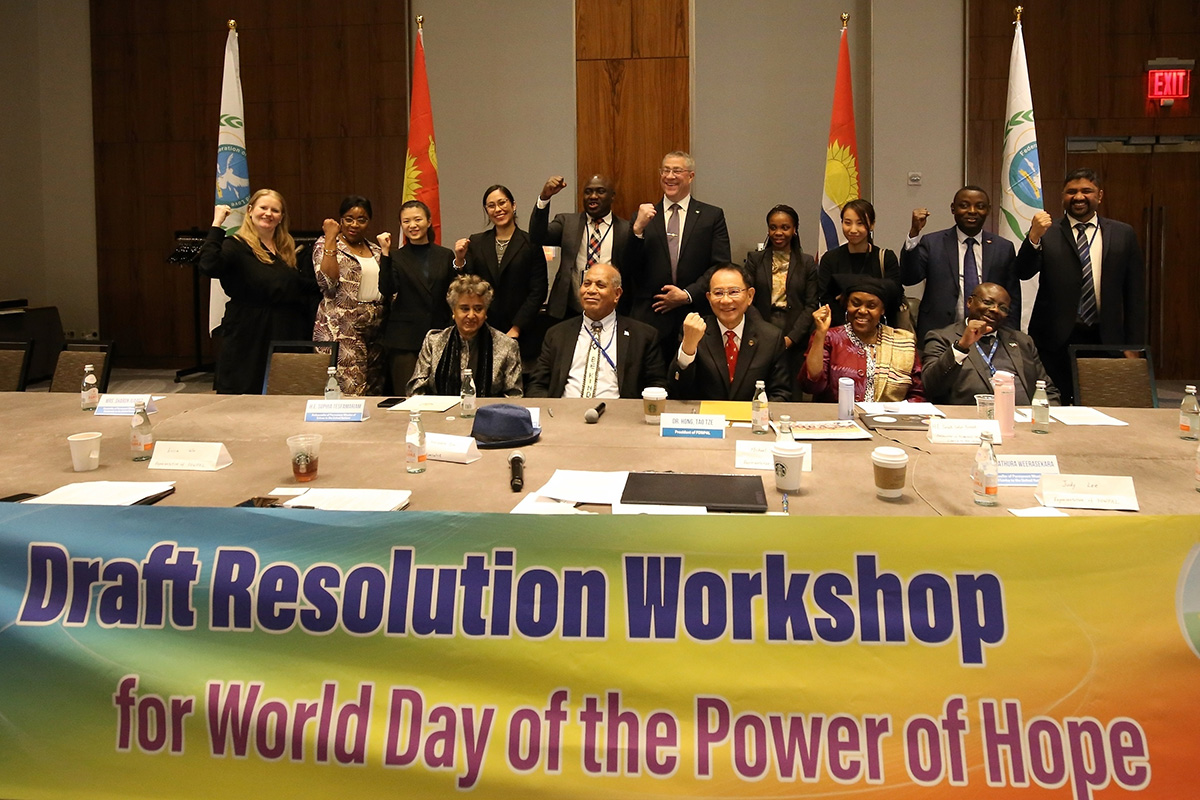
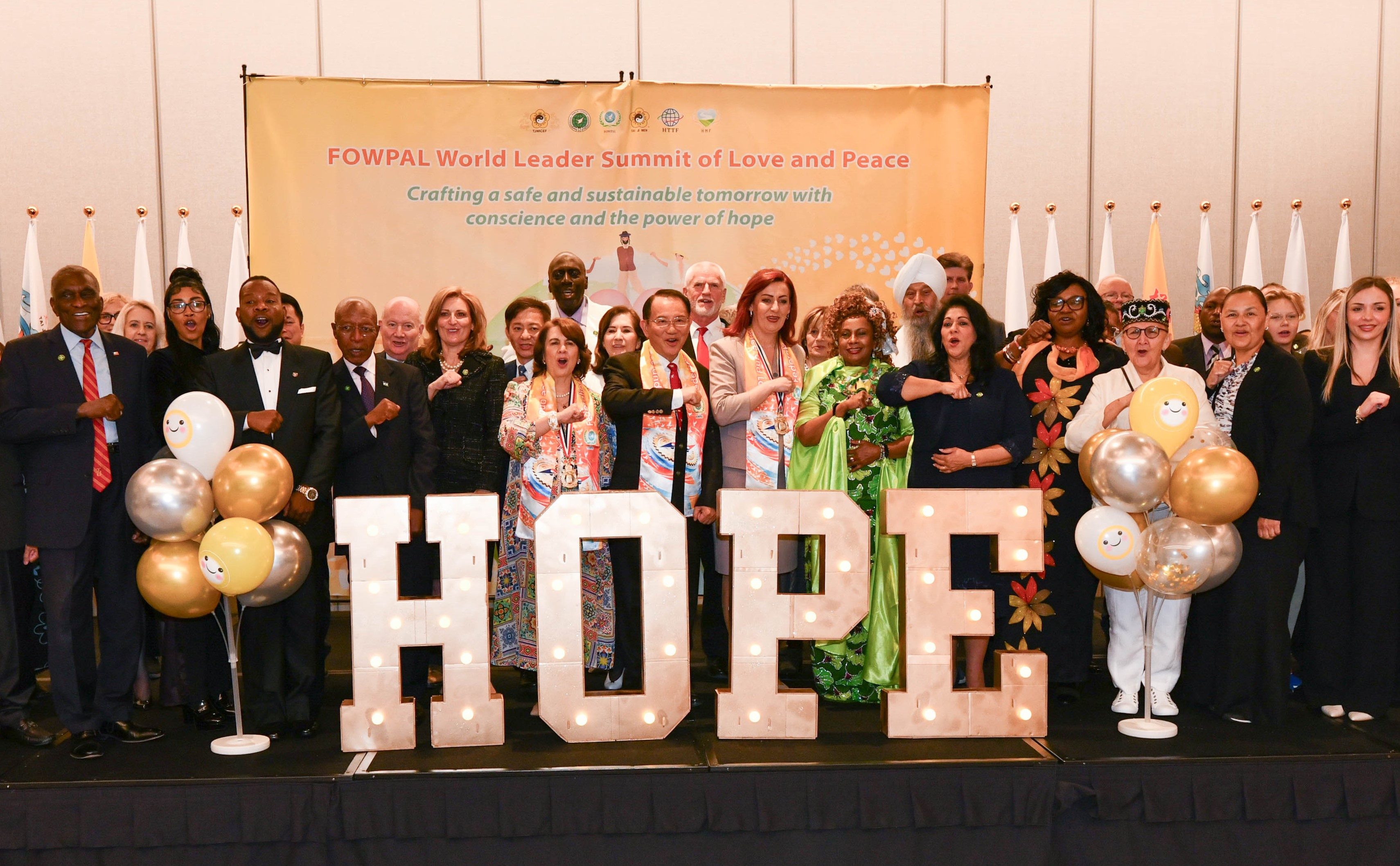
Conscience, Hope, and Action: Keys to Global Peace and Sustainability
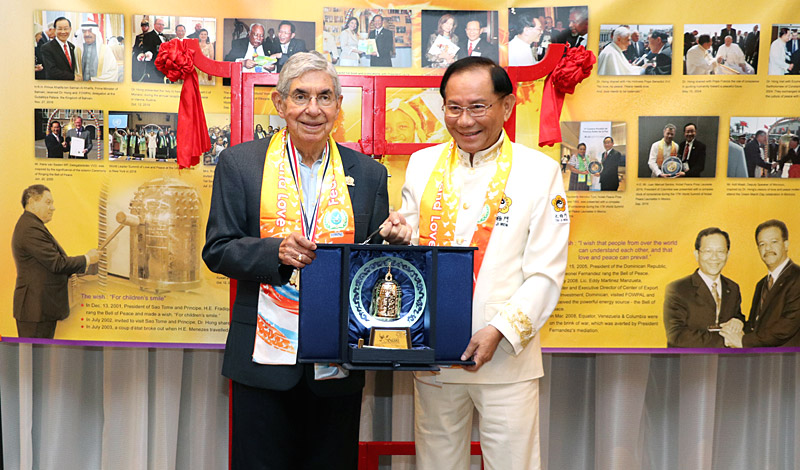
Ringing FOWPAL’s Peace Bell for the World:Nobel Peace Prize Laureates’ Visions and Actions
Protecting the World’s Cultural Diversity for a Sustainable Future

Puppet Show I International Friendship Day 2020