Science
2D-nanocellulose: piezoelectric driven by a hydrogen bonds pattern
In the next coming years nanocellulose (NC) would attract lot of attention from industrial researchers (market value is estimated to be 530 M$ worldwide by 2020)(1). The process of development and functionalization of NC materials is being promising because of their well-known unique optomechanical features and green nature. However, there is still a niche for applications based on NC electric-response. In this scenario, the results published in Scientific Reports with the participation of ICN2 researchers, would set up foundations for new strategies intended to drive novel applications based on 2D-NC with a predicted piezoelectric-response ~ pm V-1. This result could rank NC at the level of currently used bulk piezoelectrics like α-quartz and most recent 2D materials like MoSe2 or doped graphene. The first author of the article is Dr Yamila García, and the last one ICREA Research prof. Dr Clivia M. Sotomayor-Torres, Group leader of the ICN2 Phononic and Photonic Nanostructures Group.
- Read more
- 395 reads
Mission Prepares for Next Jupiter Pass
Mission managers for NASA's Juno mission to Jupiter have decided to postpone the upcoming burn of its main rocket motor originally scheduled for Oct. 19. This burn, called the period reduction maneuver (PRM), was to reduce Juno's orbital period around Jupiter from 53.4 to 14 days. The decision was made in order to further study the performance of a set of valves that are part of the spacecraft's fuel pressurization system. The period reduction maneuver was the final scheduled burn of Juno's main engine.
- Read more
- 367 reads

UCLA chemists report new insights about properties of matter at the nanoscale: Research may lead to new, smaller molecular machines
"We are learning more and more about the properties of matter at the nanoscale so that we can design machines with specific functions," said senior author Miguel García-Garibay, dean of the UCLA Division of Physical Sciences and professor of chemistry and biochemistry.
- Read more
- 418 reads
Most professional football players who have surgery for an injured disc in the upper spine return to play and perform at a high level, a new study contends.
Making sure cancer medications reach the leaky blood vessels surrounding most tumor sites is one of the critical aspects of treatment and drug delivery. While surface chemistry, molecular interactions, and other factors come into play once drug-carrying particles arrive at a tumor, therapeutic medication doesn't do very much good if it never reaches its intended target.
- Read more
- 421 reads
Once temperatures drop and activities move indoors, it's time to store gardening power tools safely for the winter.
In order to be useful as solar cells, perovskite films must be able to harvest solar energy at a high efficiency that is cost-effective, be relatively easy to manufacture, and be able to withstand the outdoor environment over a long period of time. Dr. Yan Jiang in Prof. Qi's lab has recently published research in Materials Horizons that may help increase the solar efficiency of the organo-metal halide perovskite MAPbI3. He discovered that the use of a methylamine solution during post-annealing led to a decrease in problems associated with grain boundaries. Grain boundaries manifest as gaps between crystalline domains and can lead to unwanted charge recombination. This is a common occurrence in perovskite films and can reduce their efficiency, making the improvement of grain boundary issues essential to maintain high device performance. Dr. Jiang's novel post annealing treatment produced solar cells that had fused grain boundaries, reduced charge recombination, and displayed an outstanding conversion efficiency of 18.4%. His treated perovskite films also exhibited exceptional stability and reproducibility, making his method useful for industrial production of solar cells.
- Read more
- 384 reads
Rosetta’s journey ends in daring descent to comet
ESA’s historic Rosetta mission has concluded as planned, with the controlled impact onto the comet it had been investigating for more than two years.
- Read more
- 449 reads
INVECAS will work closely with GLOBALFOUNDRIES’ technology teams to develop and verify a range of intellectual property (IP) for the company’s 22FDX process. Moreover, INVECAS will offer comprehensive ASIC design services to help customers realize SoC des
During bilateral meetings in Daejeon, South Korea, NASA and France’s Office National d'Etudes et de Recherches Aerospatiales (ONERA) signed an agreement Tuesday to collaborate on research that focuses on mitigating the effects of civil air transportation noise.
- Read more
- 407 reads
INVECAS to Enable ASIC Designs for Tomorrow’s Intelligent Systems on GLOBALFOUNDRIES' FDX™ Technology: INVECAS to Collaborate with GLOBALFOUNDRIES to Provide IP and End-to-End ASIC Design Services on 22FDX® and 12FDX™ Technologies
INVECAS will work closely with GLOBALFOUNDRIES’ technology teams to develop and verify a range of intellectual property (IP) for the company’s 22FDX process. Moreover, INVECAS will offer comprehensive ASIC design services to help customers realize SoC designs with high confidence and low risk.
- Read more
- 442 reads
NASA's Hubble Spots Possible Water Plumes Erupting on Jupiter's Moon Europa

This composite image shows suspected plumes of water vapor erupting at the 7 o'clock position off the limb of Jupiter's moon Europa. The plumes, photographed by NASA's Hubble's Space Telescope Imaging Spectrograph, were seen in silhouette as the moon passed in front of Jupiter. Hubble's ultraviolet sensitivity allowed for the features, rising over 100 miles above Europa's icy surface, to be discerned. The water is believed to come from a subsurface ocean on Europa.
- Read more
- 453 reads
Human Rights
Fostering a More Humane World: The 28th Eurasian Economic Summi

Conscience, Hope, and Action: Keys to Global Peace and Sustainability
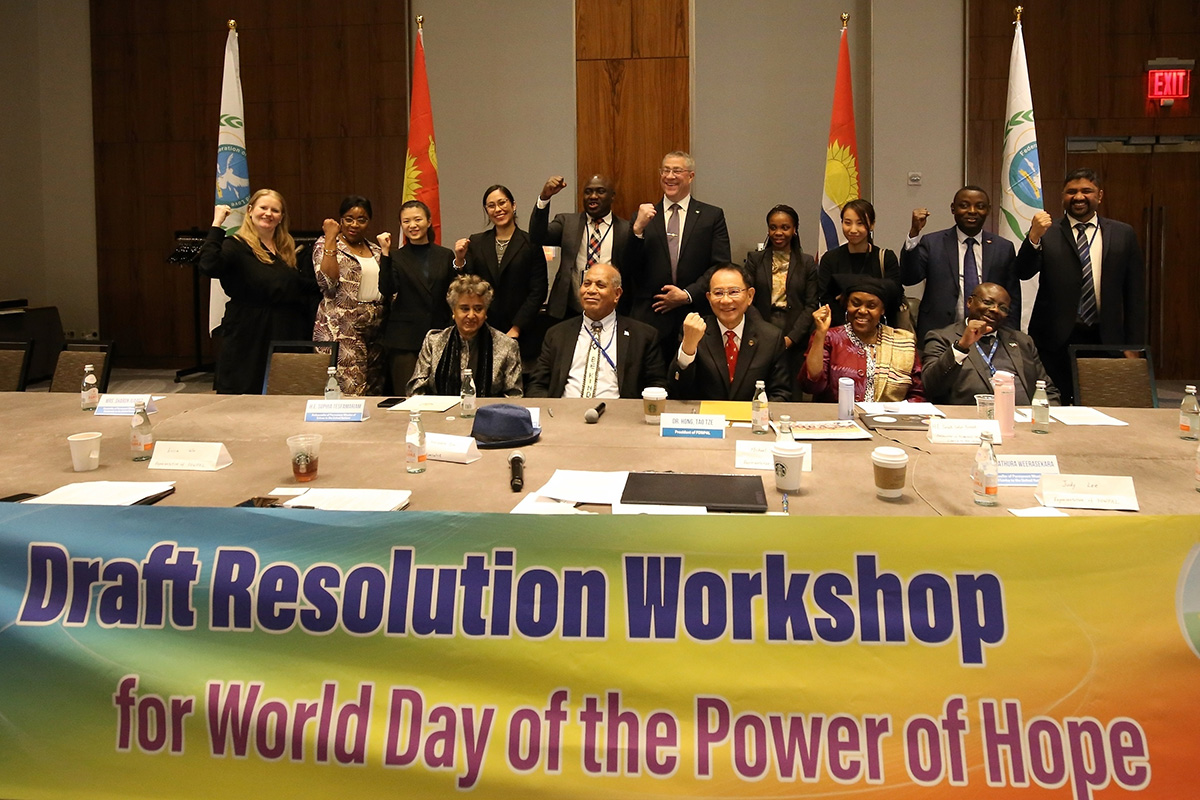
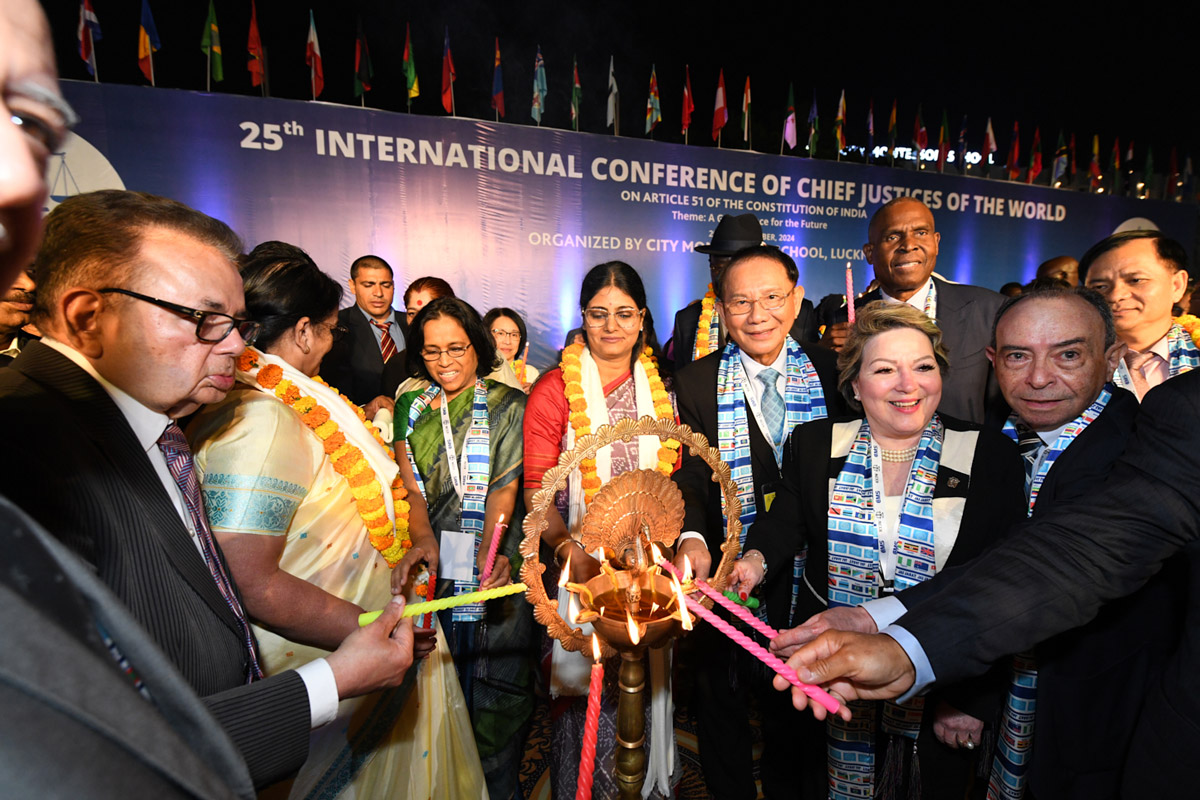
Ringing FOWPAL’s Peace Bell for the World:Nobel Peace Prize Laureates’ Visions and Actions

Protecting the World’s Cultural Diversity for a Sustainable Future


Puppet Show I International Friendship Day 2020