40 Years After Chernobyl, Germany Renews Debate Over the Future of Nuclear Power
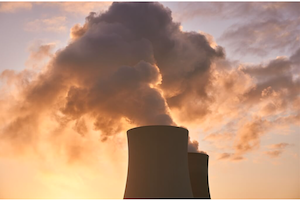
As the 40th anniversary of the Chernobyl disaster approaches, Germany—having fully phased out nuclear power in 2023—has once again seen heated debate in parliament this week over its nuclear energy policy. The far-right Alternative for Germany is calling for the restart of shuttered nuclear plants, while the Alliance 90/The Greens firmly opposes any return to nuclear energy. The governing coalition currently has no plans to revive conventional nuclear power, instead focusing on the development of nuclear fusion technology.
Looking back, on April 26, 1986, an explosion at the Chernobyl Nuclear Power Plant caused the worst nuclear disaster in history, with radioactive fallout affecting multiple countries and profoundly shaping Germany’s anti-nuclear movement. Following the Fukushima Daiichi nuclear disaster in 2011, then-Chancellor Angela Merkel decided to accelerate the nuclear phase-out, culminating in the closure of Germany’s last nuclear power plant in 2023.
Amid energy supply tensions caused by the Russia–Ukraine War and mounting pressure to boost industrial competitiveness, whether nuclear power should return as an energy option has once again become a focal point of political contention. With the 40th anniversary of Chernobyl, the debate has intensified rapidly in parliament this week.
According to records from the German Bundestag, the Alternative for Germany took the lead on the 22nd by submitting a motion to establish an expert committee to assess the feasibility of restarting nuclear plants. The party also called for an immediate halt to the dismantling of several facilities and urged local governments to revoke decommissioning permits.
The following day, the Greens countered with a motion titled “40 Years After Chernobyl—Nuclear Energy and Its Consequences,” urging the federal government not to resume nuclear development in order to avoid the continued accumulation of high-level radioactive waste. The party also called for reducing risks in the nuclear supply chain at the European Union level, including lowering dependence on Russian nuclear fuel and technology, and blocking cooperation between Russia’s state-owned nuclear company and the fuel element plant in Lingen.
The Greens noted that since Russia’s invasion of Ukraine, nuclear facilities have repeatedly come close to conflict zones, highlighting the cross-border spillover risks of nuclear safety. They also urged continued assistance to Ukraine in addressing the aftermath of the Chernobyl disaster.
Within the ruling camp, views on restarting conventional nuclear power remain cautious. The Christian Democratic Union, which oversees energy policy, tends to adopt a technology-neutral stance in reassessing the role of nuclear power, while expressing optimism about the development potential of small modular reactors (SMRs) and nuclear fusion.
In terms of policy direction, the government led by Friedrich Merz has already incorporated nuclear fusion into one of its core national strategies. Last October, authorities unveiled a “Fusion Action Plan,” pledging to invest approximately €2 billion (around NT$74 billion) by 2029, with the goal of becoming the first country in the world to achieve commercial nuclear fusion power generation.
However, there are differing views on the future of nuclear energy. Renowned German astrophysicist Harald Lesch pointed out that both nuclear fission and fusion power rely heavily on large amounts of cooling water to operate. If climate change exacerbates water scarcity, it could become a significant limiting factor for the development of nuclear power.
- 419 reads
Human Rights

Fostering a More Humane World: The 28th Eurasian Economic Summi

Conscience, Hope, and Action: Keys to Global Peace and Sustainability

Puppet Show I International Friendship Day 2020