The United States and Israel say the ceasefire agreement does not cover Lebanon; Iran retaliates by once again blocking the Strait of Hormuz.
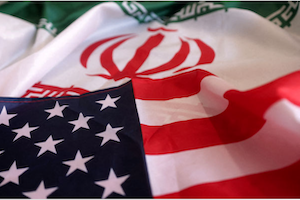
The United States and Israel say the ceasefire agreement does not cover Lebanon; Iran retaliates by once again blocking the Strait of Hormuz.
A two-week ceasefire agreement reached between the United States and Iran to buy time for diplomatic negotiations is now at risk of collapse in less than 48 hours. The two sides have differing interpretations regarding the scope of the ceasefire. Israel launched its most intense airstrikes on Lebanon since the outbreak of the conflict, prompting Iran to announce the resumption of a de facto blockade of the Strait of Hormuz. Geopolitical risks have once again cast a shadow over the global energy market.
The core of the conflict lies in differing interpretations of the ceasefire’s scope. Iran and mediator Pakistan both maintain that the agreement includes the Lebanese front, while Israel and the United States insist that operations against Hezbollah in Lebanon are not covered by the U.S.-Iran ceasefire. Israel subsequently carried out its largest-scale airstrikes since the war began on the southern suburbs of Beirut and areas surrounding its airport, resulting in more than 300 deaths and over a thousand injuries. Tehran strongly condemned the attacks, calling them a “massacre” and accusing them of violating the negotiation framework.
In retaliation for Israel’s strikes on Lebanon, Iran’s Islamic Revolutionary Guard Corps (IRGC) announced on the 9th that, due to “mine-related risks” in the region, all commercial vessels must reroute and follow official guidance. By reinstating the blockade of the strait, Iran has effectively implemented a “Tehran tollgate,” demanding transit fees of up to $2 million per vessel, payable in Bitcoin or other cryptocurrencies. This move challenges the petrodollar system while circumventing U.S. financial sanctions and SWIFT monitoring. Transit traffic has dropped by 95% compared to pre-conflict levels, leaving more than 800 cargo ships stranded in the Persian Gulf. Oil prices have rebounded sharply, with Brent crude once again nearing the $100-per-barrel mark. Fertilizer supplies and AI technology supply chains are also expected to face structurally higher costs.
U.S. President Donald Trump described Iran’s renewed closure of the strait as “completely unacceptable,” emphasizing that all U.S. naval and air forces deployed in the Middle East will remain in place. He warned that Iran must fully comply with the agreement or face “unprecedented” military strikes. Representatives from both sides are scheduled to meet in Islamabad, Pakistan. A U.S. delegation led by Vice President JD Vance will meet with Iranian representatives on the 11th in an effort to find common ground and preserve the extremely fragile ceasefire.
- 113 reads
Human Rights

Fostering a More Humane World: The 28th Eurasian Economic Summi

Conscience, Hope, and Action: Keys to Global Peace and Sustainability

Puppet Show I International Friendship Day 2020