U.S. Supreme Court Rules Trump’s Reciprocal Tariffs Unlawful
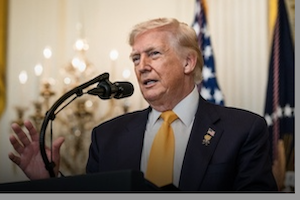
On the 20th, the U.S. Supreme Court overturned former President Trump’s global tariffs. In a 6–3 decision, the Court ruled that the Trump administration’s use of the “International Emergency Economic Powers Act of 1977 (IEEPA)” to impose tariffs on multiple countries worldwide was unconstitutional. Trump denounced the ruling as absurd and, within hours of the decision, signed an executive order invoking Section 122 of the Trade Act of 1974 to impose a 10% tariff on all countries for 150 days, effective from the 24th.
In a 6–3 vote, the Supreme Court declared that Trump’s use of IEEPA to impose reciprocal tariffs was unlawful, marking a significant setback for his administration. However, the ruling did not address the issue of refunding unlawfully collected tariffs. The Court stated that while IEEPA allows the president to regulate imports after declaring a national emergency in response to unusual and extraordinary threats, the law does not explicitly grant the president authority to impose tariffs directly. The Court held that the power to levy taxes belongs to Congress.
Chief Justice Roberts rejected the view that the president has the authority to “unilaterally impose unlimited tariffs and change them at will.” He emphasized that the Constitution grants Congress the power to impose tariffs in peacetime, and that the president must obtain congressional authorization to justify such actions. It was clear, however, that the president could not secure such authorization from Congress.
Trump strongly criticized “certain members of the Court,” saying he felt “ashamed — absolutely ashamed” of them for lacking the courage to do what is right for the country. He called the ruling wrong but added that it did not matter “because we have very powerful alternatives.”
Trump subsequently announced a 10% tariff on all global imports under Section 122 of the Trade Act of 1974 and launched new investigations under other legal authorities, while halting the collection of reciprocal tariffs and other tariffs invalidated by the Court. Section 122 of the Trade Act of 1974 authorizes the president to impose tariffs of up to 15% to address “large and serious international balance-of-payments deficits,” for up to 150 days, with possible extension subject to congressional approval.
- 145 reads
Human Rights

Fostering a More Humane World: The 28th Eurasian Economic Summi

Conscience, Hope, and Action: Keys to Global Peace and Sustainability

Puppet Show I International Friendship Day 2020