Experts Say Lower House Election Will Shape Japan’s National Security and Foreign Policy
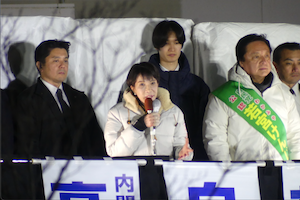
In Japan’s House of Representatives election, the Liberal Democratic Party (LDP) led by Prime Minister Sanae Takaichi not only secured an outright majority on its own, but also surpassed the two-thirds threshold required to propose constitutional amendments, making Takaichi the biggest winner of the election.
In this round of Lower House elections, the LDP won a total of 316 seats, while the Japan Innovation Party, which forms a governing coalition with the LDP, captured 36 seats. Together, the two parties hold 352 seats—enough to independently initiate constitutional revision. Experts note that Japan will be compelled to seek a balance between stabilizing relations with China and strengthening the U.S.–Japan alliance, and that the election outcome will directly shape the country’s national security posture and foreign policy trajectory.
A public opinion poll released on January 24 by All-Nippon News Network showed that voters’ top policy priorities were responding to economic stagnation and rising prices, followed by pension and social security reform, and then diplomacy and national security. The results indicate that livelihood issues and security concerns have jointly emerged as central themes of the election. Within the U.S.–Japan relationship, security has consistently remained at the core, with debates extending to defense spending. In December last year, U.S. Secretary of Defense Pete Hegseth said Washington had asked allies including Japan to raise defense spending to 5 percent of gross domestic product (GDP) over the coming years. Tetsuo Kotani, a professor at Meikai University, noted that regardless of whether Japan fully complies, the U.S. demand will inevitably place heavy pressure on public finances and become an unavoidable issue within the U.S.–Japan alliance.
Kyodo News editorial board member Masahiko Hisae argued that regardless of which party is in power, Japan must confront the burden posed by a sharp increase in defense spending. He added that revising the three key national security documents could lead to controversial measures such as tax hikes, further intensifying domestic divisions, and that party positions on these issues would become an important reference for voters.
Naoyuki Hayashi, former political editor at Asahi Shimbun, said the distribution of seats in the House of Representatives will directly influence the direction and priorities of future policymaking. Many experts broadly agree that this election is not only about the structure of political power, but will also profoundly shape Japan’s future diplomatic and security strategy. The positioning of the U.S.–Japan alliance, the burden of defense costs, China policy, and how Japan maintains autonomous security amid global uncertainty are all key issues voters must carefully consider.
On diplomacy and security policy, Hayashi called on Japan to foster consensus through calm and rational public debate at both parliamentary and governmental levels in order to establish a long-term foreign policy direction. Whether managing the U.S.–Japan alliance or relations with China, he said, discussions must be grounded in restraint and pragmatism. He also noted that while Japan will inevitably adjust its approach to China in line with U.S. policy shifts, current Sino-Japanese relations are already at a low point, placing Japan in an even more difficult position. The government, he argued, needs to fundamentally rethink ways to improve bilateral relations.
- 161 reads
Human Rights

Fostering a More Humane World: The 28th Eurasian Economic Summi

Conscience, Hope, and Action: Keys to Global Peace and Sustainability


Puppet Show I International Friendship Day 2020