Russia Launches Large-Scale Airstrikes on Ukraine; Power Outages Hit 45,000 Households in Kyiv
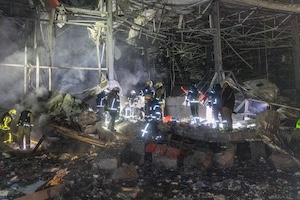
Russia recently (on the 12th) carried out its second large-scale drone and missile assault on Ukraine, once again targeting the power grid. The attacks intensified strikes on energy and other critical infrastructure amid harsh winter conditions. As Moscow’s invasion of its neighbor approaches its fourth year, the move appears to openly disregard U.S.-led efforts toward peace.
Ukrainian President Volodymyr Zelenskyy said Russian forces launched nearly 300 drones, 18 ballistic missiles, and seven cruise missiles at eight regions overnight. Russia also used a new hypersonic missile for the second time in the war, striking western Ukraine—apparently sending a “no backing down” warning to NATO. One wave of attacks killed four people at a postal warehouse facility in Kharkiv Oblast in the northeast, while hundreds of thousands of households in Kyiv Oblast were left without electricity.
Water utility pumping stations have switched to generator power, and water supply continues, though pressure issues may occur. The full extent of the damage remains unclear, and Russia has not responded to the incident. Throughout the four-year war, Russia has repeatedly targeted energy infrastructure, disrupting heating and water supplies for Ukrainian civilians in an apparent attempt to wear down public morale. Ukrainian officials have described this strategy as “weaponizing winter,” with civilians far from the front lines suffering collateral harm.
The central Ukrainian city of Kryvyi Rih has also been repeatedly attacked, resulting in civilian deaths and damage to homes and industrial facilities. The city is a major steel and mining hub and the hometown of President Zelenskyy. Located not far from the southern front line, Kryvyi Rih’s factories, logistics networks, and workforce are vital to Ukraine’s economy and serve as a key rear support center for the war effort. The head of the local military administration, Oleksandr Vilkul, urged residents to remain vigilant, store water, and charge electronic devices as much as possible, warning that difficult times lie ahead.
Since Russia’s full-scale invasion of Ukraine, it has repeatedly struck power plants, substations, and transmission lines with missiles and drones, aiming to cripple electricity and heating systems and disrupt industrial operations. These attacks have forced rolling blackouts and emergency power rationing across Ukrainian cities, while repair crews work under fire to restore services. Ukraine has had to rely on air defense systems and imported electricity to stabilize its power grid.
According to data from the UN Human Rights Monitoring Mission in Ukraine, intensified Russian airstrikes behind the front lines have made 2025 the deadliest year for Ukrainian civilians since Russia’s invasion began in 2022.
The United States has also accused Russia of carrying out “dangerous and unjustified escalation” while the Trump administration is pushing for peace talks. At an emergency UN Security Council meeting, U.S. Deputy Permanent Representative Tammy Bruce said the White House deeply regrets the “staggering number of casualties” in the conflict and condemned Russia for targeting energy systems and escalating attacks on Ukraine’s energy and other critical infrastructure.
- 125 reads
Human Rights

Fostering a More Humane World: The 28th Eurasian Economic Summi

Conscience, Hope, and Action: Keys to Global Peace and Sustainability

Puppet Show I International Friendship Day 2020