Iran Protests Continue as Trump and Senior Tehran Officials Trade Barbs
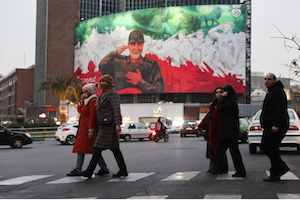
As Iran’s currency, the rial, has plunged sharply, inflation has surged and living conditions have deteriorated, large-scale economic and anti-government protests have erupted across multiple parts of the country. The demonstrations have entered their sixth day, spreading from the capital Tehran to several other towns and cities, and have led to clashes with security forces. At least seven people have been killed, with dozens injured or detained, marking the most significant wave of unrest since the nationwide protests sparked by the death of Mahsa Amini in 2022.
Protesters are no longer focused solely on economic grievances. Some crowds have chanted overtly anti-government slogans, while police and security forces have at times responded with live ammunition, drawing heightened domestic and international attention.
U.S. President Donald Trump posted on his social media platform Truth Social, stating: “If Iran shoots peaceful protesters as it usually does, the United States will come to rescue them. Our bullets are loaded and ready.” The remarks were widely interpreted as a direct warning to the Iranian government, implying that Washington could resort to military or other forms of action if necessary to protect demonstrators. Following Trump’s comments, the U.S. State Department publicly shared videos of the protests and voiced support for the “courage and determination” shown by the Iranian people.
Senior Iranian official Ali Larijani, a former speaker of parliament and currently secretary of the Supreme National Security Council, accused the United States and Israel of inciting the protests. He warned that “U.S. interference in Iran’s internal affairs will lead to chaos across the entire region and the destruction of American interests. The American people should take care of their own soldiers.”
Iran’s Foreign Ministry condemned Trump’s remarks as provocative and threatening, accusing Washington of escalating regional tensions. Officials said that if the United States were to intervene, Iran would respond with swift, comprehensive and decisive countermeasures.
Some reports also noted that Iran’s leadership views the United States and its regional military presence as potential “legitimate targets,” and has not ruled out retaliation should such actions be deemed hostile.
Iran’s ambassador to the United Nations has submitted a formal letter of protest to the UN secretary-general and the Security Council, describing the U.S. president’s statements as “reckless and inflammatory threats,” and urging the international community to condemn the remarks to prevent further deterioration of the situation.
The current wave of protests was triggered by economic hardship and currency depreciation but has quickly evolved into broader social and political discontent. While bearing similarities to the protests following Mahsa Amini’s death in 2022, the unrest has not yet spread to every province nationwide. U.S.-Iran tensions have been steadily rising since U.S. airstrikes on Iranian nuclear facilities last year, and the latest protests and war of words have once again intensified the confrontation between the two sides.
- 132 reads
Human Rights
Fostering a More Humane World: The 28th Eurasian Economic Summi
Conscience, Hope, and Action: Keys to Global Peace and Sustainability
Puppet Show I International Friendship Day 2020