Renewed Thailand–Cambodia Border Clashes: Trump Calls for Ceasefire; 500,000 Displaced and Cultural Heritage at Risk
After Thailand and Cambodia experienced a border military clash in July, the two sides—already under pressure from Trump’s tariff threats—had successfully reached a ceasefire agreement, and formally signed the *Kuala Lumpur Peace Accord* on October 26 in Kuala Lumpur. Unexpectedly, the situation escalated again on the 7th after Cambodian troops opened fire on a Thai engineering team that was repairing a road along the disputed border, injuring two Thai soldiers. The clashes have already forced more than 500,000 civilians to flee their homes, about 400,000 of whom are Thai.
Beginning on the 8th, the Thai military launched attacks using F-16s and drones on the town of Samraong, about 20 kilometers from the border. The Thai military accused Cambodian forces of firing rockets that landed near Phanom Dong Rak Hospital in Surin Province, while Cambodia’s Ministry of Defense claimed that at dawn on the 11th, the Thai military shelled the area around Khnar Temple in Oddar Meanchey Province. The Thai military also announced that a curfew from 7 p.m. to 5 a.m. would be imposed starting on the night of the 10th in parts of Sa Kaeo Province.
In addition, the fighting has endangered valuable local cultural heritage. UNESCO has expressed particular concern over hostilities near the Preah Vihear Temple—a World Heritage Site—and has provided both sides with the coordinates of relevant cultural monuments to help prevent irreversible loss to humanity.
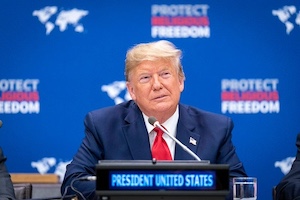
In an interview, Trump said he planned to speak with leaders of both Thailand and Cambodia to urge an immediate ceasefire. The Pope has also called for an immediate halt to fighting and a resumption of dialogue. In an interview with Reuters on the 9th, Thai Foreign Minister Sihasak Phuangketkeow stated that tariff threats should not be used as leverage to pressure Thailand and Cambodia into negotiations or to end border clashes. He added that the current situation is not suitable for third-party mediation, emphasizing that the cessation of conflict depends on whether Phnom Penh is willing to take the first step to halt its actions and ease tensions.
- 152 reads
Human Rights
Fostering a More Humane World: The 28th Eurasian Economic Summi
Conscience, Hope, and Action: Keys to Global Peace and Sustainability
Puppet Show I International Friendship Day 2020