Peru Declares State of Emergency as Migrant Surge Hits Border
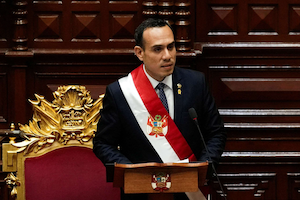
Peruvian President José Jerí announced on the 28th that the Tacna region in the country’s south, which borders Chile, will be placed under a 60-day state of emergency. During this period, the Peruvian military will assist the police in tightening border controls. Peru stated that the move is mainly intended to address a potential influx of migrants and security threats stemming from Chile’s political situation.
The trigger for this development is Chile’s upcoming presidential election and the tough anti-immigration rhetoric of far-right candidate José Antonio Kast. During the campaign, Kast repeatedly expressed strong anti-immigrant positions, even issuing an ultimatum to the roughly 330,000 undocumented migrants in Chile, warning that if elected, illegal migrants must leave voluntarily within a few months or face deportation. Many of these undocumented migrants are Venezuelans fleeing their country’s economic collapse. Kast’s remarks have caused panic among them, prompting large numbers to try to cross the border into Peru before the Chilean government takes action.
Media outlets and government agencies in the Peruvian border region have reported that dozens of migrants are already stranded at Chilean border checkpoints, eager to enter Peru but lacking the necessary documents. The Peruvian government is concerned that a surge of migrants could bring a range of security and social challenges.
Chile, one of the most stable and affluent nations in South America and the region’s first OECD member, has experienced a major influx of migrants in recent years. Most come from Venezuela, along with others from Colombia, Ecuador, and Bolivia. Rising concerns over migrant-related crime and pressure on public resources have fueled domestic discontent, making immigration a central issue in this presidential election. Peru’s border emergency highlights not only the ongoing migration crisis across South America but also the diplomatic strains and humanitarian challenges that unilateral actions can create in the absence of regional consensus.
- 172 reads
Human Rights
Fostering a More Humane World: The 28th Eurasian Economic Summi
Conscience, Hope, and Action: Keys to Global Peace and Sustainability
Puppet Show I International Friendship Day 2020