Ishiba Faces Ouster as LDP Suffers Three Election Defeats in Less Than a Year Under His Leadership
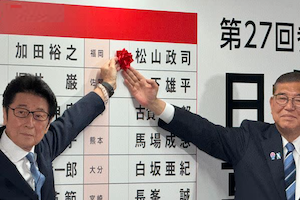
Japan held its House of Councillors election on July 20, where the ruling coalition—comprising the Liberal Democratic Party (LDP) and Komeito—lost its majority, triggering political turbulence. Despite the unfavorable outcome, Prime Minister Shigeru Ishiba announced at a press conference the following day that he would remain in office, stressing that he bears the responsibility to lead the nation through what he called “a time of national crisis,” referencing ongoing Japan-U.S. tariff negotiations and rising domestic prices.
According to foreign media reports, Ishiba’s decision sparked intense dissatisfaction within the LDP. Party insiders pointed out that the LDP has now suffered three consecutive defeats—in the 2024 House of Representatives election, the 2025 Tokyo Metropolitan Assembly election, and the latest Upper House election. Several lawmakers criticized Ishiba for failing to take political responsibility and called for his resignation.
Acting LDP Secretary-General Tatsuo Fukuda revealed that he received about 20 calls from party members on election night, with many young lawmakers expressing deep frustration over the results. Former Minister for Economic Security Takayuki Kobayashi also publicly stated that, as party leader, Ishiba must confront his responsibilities.
On July 21, senior party advisor Taro Aso and former Secretary-General Toshimitsu Motegi held talks and reached a consensus that failing to hold anyone accountable would invite further criticism. However, not only did Ishiba declare his intention to stay on, the entire party executive team also retained their positions—including Secretary-General Hiroshi Moriyama—prompting further backlash. On social media platform X, Acting Election Strategy Committee Chair Taro Kono criticized the move, saying that while the Prime Minister may have a reason to remain in office due to the tariff negotiations, Moriyama’s decision not to resign as the official in charge of elections was simply “wrong.”
- 165 reads
Human Rights
Fostering a More Humane World: The 28th Eurasian Economic Summi

Conscience, Hope, and Action: Keys to Global Peace and Sustainability

Puppet Show I International Friendship Day 2020