Anomaly Detected During Testing; NASA’s Crewed Lunar Flyby Mission Postponed
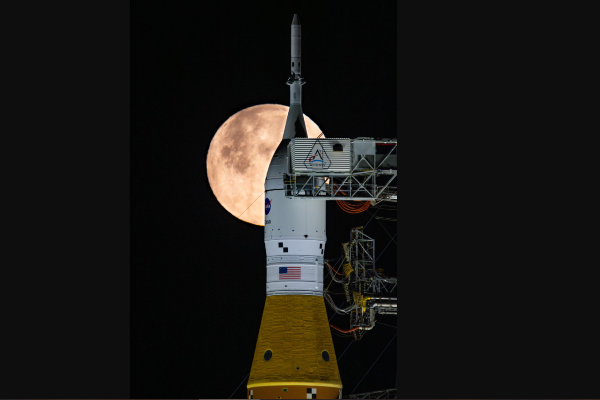
NASA recently announced that its crewed lunar flyby mission, originally scheduled for February, will be postponed after liquid hydrogen leaks were once again detected during rocket testing. The launch has been temporarily suspended, and the mission timeline will be reassessed in March. Considered a major milestone in humanity’s return to deep space, the delay has drawn widespread attention.
The affected mission is Artemis II, which uses the Space Launch System rocket. The issue arose during a pre-launch Wet Dress Rehearsal conducted at the Kennedy Space Center in Florida. While cryogenic propellants were being loaded, engineers detected a hydrogen leak near the base of the rocket, forcing the countdown sequence to be aborted near its final stages.
NASA Administrator Jared Isaacman stated that the initial leak appeared manageable, but as the simulated launch progressed into a critical phase, the anomaly intensified. Based on risk management considerations, the team decided to halt the test entirely. He emphasized that safety is the top priority for all crewed missions, and launch preparations will only resume once all systems meet required reliability standards.
NASA officials further explained that hydrogen fuel, while offering high energy and low density, places extremely demanding requirements on sealing and piping systems, making it one of the most challenging aspects of space launches. In addition to the fuel issue, the test also revealed problems with pressurization valves on the spacecraft hatch, as well as instability in ground communication audio systems, all of which require further inspection and verification.
Looking back, the uncrewed Artemis I lunar mission was also delayed by similar fuel-related issues but ultimately completed its flight successfully. The Artemis II mission is expected to last about ten days and will carry a crew of three American astronauts and one Canadian astronaut. Without landing on the Moon, the spacecraft will orbit it, laying crucial groundwork for future missions aimed at returning humans to the lunar surface.
- 307 reads
Human Rights

Fostering a More Humane World: The 28th Eurasian Economic Summi

Conscience, Hope, and Action: Keys to Global Peace and Sustainability

Puppet Show I International Friendship Day 2020