Research Rewrites T. rex Life History: Nearly 40 Years Needed to Become an 8-Ton Apex Predator
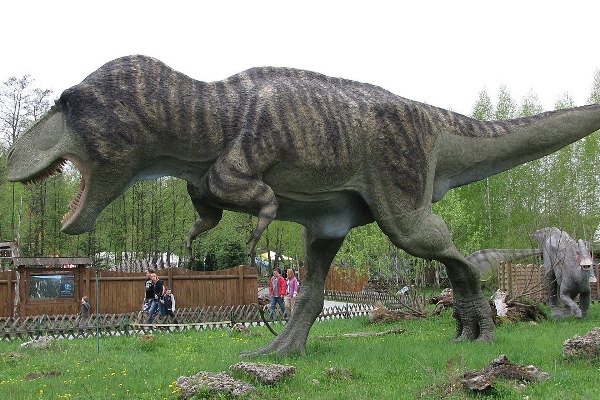
A recent paleontological study from the United States suggests that Tyrannosaurus rex was not the “fast-growing” predatory giant long imagined by the public, but instead took many years to reach its peak size. The research indicates that this top Cretaceous predator required nearly 40 years to grow to its final mass of about eight metric tons—around 15 years longer than previously estimated.
The findings were recently published in the international academic journal PeerJ. The research team analyzed leg-bone fossils from 17 T. rex individuals at different growth stages, ranging from juveniles and subadults to fully mature adults. Using polarized light microscopy, scientists identified subtle growth markers within the bones that had previously been difficult to detect, allowing the age of T. rex growth to be recalculated.
The study’s lead author, Holly Woodward, a paleohistologist at the Oklahoma State University Center for Health Sciences, explained that the new data show T. rex did not grow at a steady pace but followed a “slow and flexible” pattern. During early and middle life stages, it remained at a moderate body size for extended periods rather than gaining mass rapidly throughout its life.
In the past, researchers generally believed that T. rex stopped growing at around 25 years of age and had a lifespan of roughly 30 years. The new study, however, suggests that its life cycle may have extended to 45–50 years. Variations in the spacing of growth rings within the bones also indicate that growth slowed significantly in some years and accelerated in others, highlighting the strong influence of environmental conditions and food availability.
The researchers note that this adjustable growth strategy would have allowed T. rex to reduce energy expenditure during times of scarce resources and accelerate development when conditions were favorable, ultimately helping it stand out in highly competitive ecosystems. Once fully mature, it would have faced little need to compete with other carnivorous dinosaurs for prey.
One of the co-authors, paleontologist Jack Horner of Chapman University, added that a longer growth period implies that T. rex individuals of different ages may have adopted distinctly different feeding strategies. Younger individuals were more likely to actively hunt, while large, older individuals may have shifted toward more opportunistic feeding.
The research team believes that these findings not only reshape our understanding of T. rex growth rates and lifespan, but also demonstrate that the analytical methods used in studies of dinosaur growth still have room for further refinement and improvement.
- 408 reads
Human Rights

Fostering a More Humane World: The 28th Eurasian Economic Summi

Conscience, Hope, and Action: Keys to Global Peace and Sustainability


Puppet Show I International Friendship Day 2020